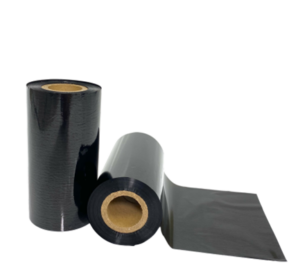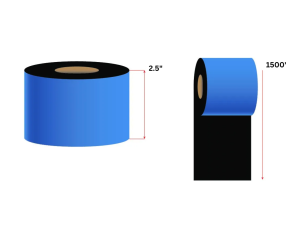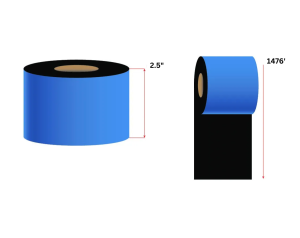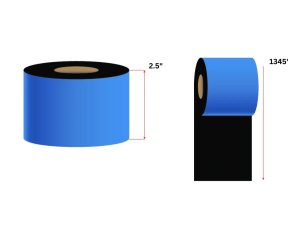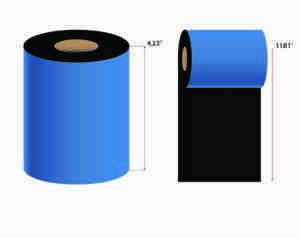
Our Thermal Transfer Ribbons deliver consistent, high-performance results. With 25+ years of manufacturing experience and factory-direct pricing, you get better quality at lower costs.
Thermal transfer printing uses heat from the barcode printer printhead to transfer ink from the ribbon to label or tag media. The printhead has hundreds of tiny heating elements that warm up and transfer the image based on the print design. When these elements heat up, the print head melts the resin or wax ink coating from the thermal ribbon to the label or tag media, creating the ‘transferred’ image or barcode on the label or tag stock.
Thermal transfer ribbons have multiple layers that work together to create quality prints. Each part plays a specific role in how well the ribbon performs:
Base Film: Polyester backing that provides stability and heat resistance during the printing process.
Ink Layer: Contains pigments, waxes, and resins that determine print quality, durability, and scratch resistance.
Release Coating: Allows smooth ink transfer from ribbon to label while preventing sticking to the printhead.
The three main thermal ribbon types have different strengths based on their makeup and where you’ll use them.
Wax thermal transfer ribbons work great for basic printing when you need low cost. They’re perfect for short-term indoor use where durability isn’t the primary concern:
Wax-resin thermal transfer ribbons fill the middle ground between basic wax and premium resin by adding polymer ingredients that boost toughness. These transfer ribbons handle scratching, smudging, and mild chemical contact much better than wax alone while keeping costs manageable. The mixed formula works well on paper and synthetic labels with consistent results.
Manufacturing and industrial operations often choose wax-resin thermal ribbons for product identification, compliance tags, and asset tracking. These highly durable ribbons hold up in warehouse settings where labels get handled regularly and face temperature changes. The stronger bonding in wax-resin formulas means better ink transfer on different label materials and surface textures.
Resin thermal transfer ribbons deliver the toughest performance for the most demanding jobs. These ribbons use advanced polymers that resist harsh chemicals, extreme temperatures, and UV exposure while keeping prints sharp and readable:
These ribbons are highly durable and bond strongly with synthetic label materials. They’re built for applications where cheaper ribbons would fail and cause safety or compliance problems.
Getting the best results from thermal transfer printing means matching the right ribbon type to your label material and adhesive. Coated paper labels work great with wax thermal ribbons because their smooth surface lets ink transfer easily. Uncoated papers often need wax-resin transfer ribbons for good print density and sharp edges, especially for small text and detailed graphics.
Synthetic label materials need specific thermal transfer ribbon types to create strong bonds and lasting prints. The surface properties of different materials affect how well the ink transfers and sticks:
The surface energy of synthetic materials makes ink transfer more challenging, so stronger ribbon formulations are needed for quality results.
Print volume and budget determine which thermal transfer ribbon gives you the best overall value. Consider how upfront costs compare to long-term performance and how often you’ll need replacements:
The improved performance characteristics of better ribbon formulations also reduce downtime from print quality issues, ribbon breaks, and printhead maintenance – factors that can significantly impact your actual printing costs.
Don’t let poor-quality thermal transfer ribbons slow your work. Contact us today at [email protected] to discuss your thermal transfer ribbon needs.
Wax, wax-resin, and resin ribbons differ in durability and cost. Wax ribbons are the most cost-effective option for basic indoor labeling. Wax-resin ribbons strike a balance between affordability and scratch and chemical resistance, while resin ribbons offer maximum durability for extreme conditions, boasting high chemical and heat resistance.
Matching the right ribbon to your label material depends on the surface properties of both. Paper labels are compatible with wax ribbons, while synthetic materials such as polyester, polypropylene, and vinyl require wax-resin or resin ribbons for optimal adhesion and durability.
The most cost-effective ribbon type depends on your print volume. High-volume operations benefit from low-cost wax ribbons, medium-volume work is best suited for balanced wax-resin ribbons, and low-volume jobs achieve better value from longer-lasting resin ribbons, despite higher upfront costs.